Program Features
- Up to 80% LTV on stabilized properties
- Value-add renovation programs
- Non-recourse options available
- Streamlined approval process

Loan Type
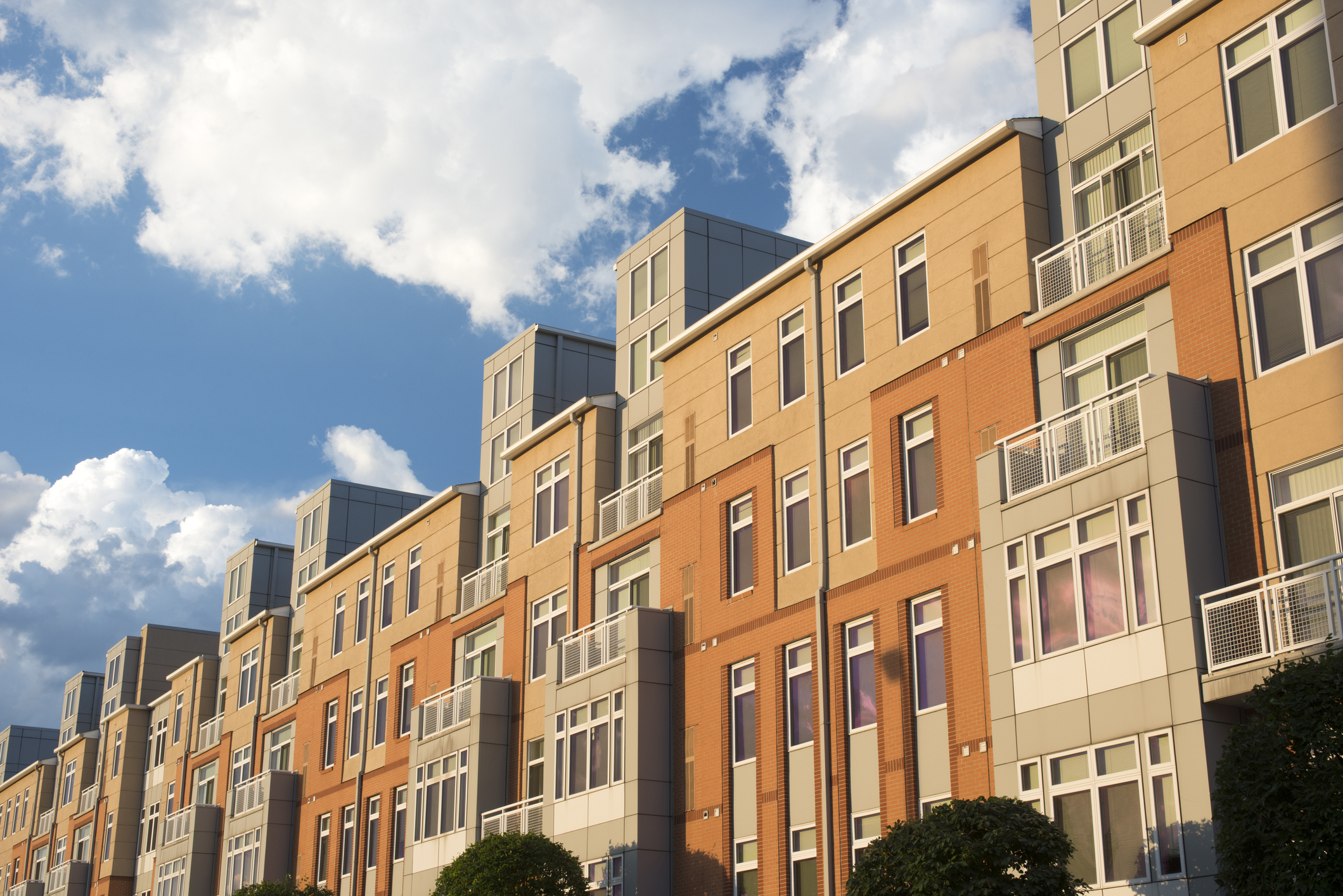
Financing for duplexes, triplexes, apartment buildings, and multi-unit complexes.
Program Features
Overview
Multi-family property hard money loans from Newport Beach Hard Money Lenders provide the specialized financing that apartment investors need to acquire, renovate, and stabilize income-producing multi-unit residential properties in Newport Beach and the adjacent Orange County markets that serve Newport Beach's professional tenant base. Newport Beach's multi-family market is concentrated in Eastbluff, Newport Heights, and the Costa Mesa border — these neighborhoods house the Hoag Hospital employees, SNA Airport corporate workers, and Irvine technology professionals who form Newport Beach's professional rental tenant class.
We close multi-family hard money loans in 10 to 14 business days with qualification centered on property-level debt service coverage ratio (DSCR), not on personal income documentation or conventional lender debt-count limits that prevent portfolio growth. Traditional multi-family lenders require 45-to-60 days for approval and fund only stabilized properties at current income levels — cutting out the entire value-add opportunity set where the best returns are generated. Our programs fund both stabilized acquisitions and value-add projects where current performance is below market because of below-market leases, deferred maintenance, or management inefficiency.
Multi-family property hard money loans from Newport Beach Hard Money Lenders provide the specialized financing that apartment investors need to acquire, renovate, and stabilize income-producing multi-unit residential properties in Newport Beach and the adjacent Orange County markets that serve Newport Beach's professional tenant base. Newport Beach's multi-family market is concentrated in Eastbluff, Newport Heights, and the Costa Mesa border — these neighborhoods house the Hoag Hospital employees, SNA Airport corporate workers, and Irvine technology professionals who form Newport Beach's professional rental tenant class.
We close multi-family hard money loans in 10 to 14 business days with qualification centered on property-level debt service coverage ratio (DSCR), not on personal income documentation or conventional lender debt-count limits that prevent portfolio growth. Traditional multi-family lenders require 45-to-60 days for approval and fund only stabilized properties at current income levels — cutting out the entire value-add opportunity set where the best returns are generated. Our programs fund both stabilized acquisitions and value-add projects where current performance is below market because of below-market leases, deferred maintenance, or management inefficiency.
Newport Beach's multi-family market commands premium rents that produce exceptional DSCR profiles. A well-located Newport Heights fourplex generating $7,500 per unit per month — $30,000 gross monthly — against a $20,000 monthly debt service produces a 1.50 DSCR that represents strong loan qualification by any standard. We recognize these rent levels accurately in our underwriting because we are a Newport Beach-specific lender, not an Orange County generalist applying county-average rent assumptions to a premium coastal sub-market.
Multi-family loans at Newport Beach Hard Money Lenders serve the investment strategies that Newport Beach's rental income market supports.
Stabilized apartment acquisition is the most common application. When a six-unit building in Newport Heights with leases at market rent and strong occupancy history comes to market, our 10-to-14-day close capability gives our borrowers a decisive advantage over conventional lenders whose approval committees cannot move at deal speed. We verify income through rent rolls and lease agreements, calculate DSCR against the in-place rental income, and close.
Value-add multi-family acquisition is where the superior returns in Newport Beach's multi-family market are generated. Buildings with below-market rents because of long-term legacy tenants, deferred maintenance that depresses occupancy, or inefficient unit configurations that don't maximize income per square foot are available at prices reflecting current performance rather than stabilized potential. We evaluate these properties on projected market rents after professional management and capital improvements — not trailing 12-month performance from a period of below-market operations.
Bridge financing for multi-family properties serves investors managing timing gaps between transactions: selling a Laguna Beach duplex to purchase a Newport Heights eight-unit, executing a 1031 exchange from a commercial property into a residential multi-family, or bridging a hard money loan on a multi-family construction project until permanent DSCR financing is arranged. We provide bridge capital secured by multi-family collateral with 12-to-18-month terms appropriate for the bridging purpose.
Renovation bridge financing for value-add projects funds the renovation capital that transforms a below-market multi-family into a market-rate performer. A Newport Beach investor who acquires a 1980s fourplex in Eastbluff for $2.8 million, renovates all four units to contemporary standard, and stabilizes at $7,500 per unit per month has executed a classic value-add cycle that our financing supports end-to-end: acquisition loan at close, renovation draws through the renovation period, and refinance into DSCR long-term financing when stabilized.
Costa Mesa and adjacent market multi-family financing extends our programs to the Orange County markets directly adjacent to Newport Beach that supply the housing stock for Newport Beach's workforce. Costa Mesa's South Coast Plaza area, Eastside neighborhoods, and areas along Harbor Boulevard house the restaurant workers, hotel staff at Pelican Hill Resort and adjacent hospitality properties, and retail workers from Fashion Island who form Newport Beach's service economy. Multi-family investment in these markets benefits from Newport Beach's economic activity while remaining at more accessible price points.
Multi-family investors targeting Newport Beach and adjacent markets face financing challenges that our programs are specifically designed to address.
Conventional loan count limits are the most common growth barrier for experienced multi-family investors. The Fannie Mae and Freddie Mac limit of 10 financed properties — including personal residence — stops portfolio growth at exactly the point where investors have proven track record and management infrastructure to scale efficiently. Our DSCR multi-family program has no property count limits. We evaluate each property on its individual income and value, and our borrowers maintain and grow portfolios of 20, 30, or more properties.
Value-add property qualification is blocked by conventional multi-family lenders who require current stabilized income. A Newport Beach multi-family with below-market rents doesn't qualify for the loan amount that market-rate stabilized performance would support — leaving investors unable to finance the acquisition at a price that reflects the property's potential. We underwrite on projected stabilized income with appropriate renovation holdbacks and lease-up timeline terms.
HOA non-warrantability is an issue for multi-family condominium investments. Newport Beach condo complexes with high investor concentration — common in buildings where investors have recognized the STR income potential near Balboa Island and Balboa Peninsula — often do not meet Fannie Mae warrantability requirements. We are not subject to those requirements and can finance units in high-investor-concentration buildings that traditional lenders cannot touch.
At Newport Beach Hard Money Lenders, multi-family loan evaluation centers on property income, operating expense history, and DSCR against the loan being requested. We review rent rolls, lease agreements, and operating statements for stabilized properties. For value-add properties, we analyze a market rent study from a local appraiser and assess the renovation scope and cost estimate to project stabilized income and timeline. Preliminary terms are issued within 24 to 48 hours of receiving property documentation.
Loan-to-value ratios typically range from 70-to-80% depending on property quality, occupancy history, and income stability. Interest reserves cover projected carrying costs during renovation or lease-up for value-add projects. Draw processes for renovation loans release funds against verified milestone completion within 48 hours of inspection. Terms range from 12 months for bridge applications to 36 months for extensive value-add projects.
We close in 10 to 14 business days on standard multi-family acquisitions. 1031 exchange requirements, where timing is driven by federal deadlines rather than market preference, receive priority processing.
Newport Beach's multi-family sub-markets reflect the city's demographic composition. Newport Heights two-to-four-unit buildings command premium rents from Hoag Hospital physicians and their families who want school-district proximity without the $10-million-plus barrier to entry of Lido Isle or Balboa Peninsula single-family properties. Eastbluff multi-family housing attracts corporate families and dual-income professional households. Costa Mesa's Eastside — bordered by Newport Beach along 17th Street — is a high-velocity rental market with rents approaching Newport Beach levels while offering entry prices 30-40% below Newport Beach proper. Balboa Island condo rentals and small multi-units are among the highest-per-square-foot residential rental assets in Orange County due to the island's limited supply and exceptional lifestyle appeal. We know these sub-markets and we apply their specific rent and occupancy fundamentals in our DSCR underwriting.
Related Services
DSCR long-term financing for stabilized Newport Beach rentals
Financing for larger mixed-use apartment complexes
Multi-family development financing for new apartment projects
Short-term capital for 1031 exchanges and portfolio transitions
Frequently Asked Questions
We finance multi-family properties from duplexes to 20-plus-unit apartment buildings throughout Newport Beach, Newport Heights, Eastbluff, and adjacent Costa Mesa and Huntington Beach markets. Smaller properties (2-4 units) qualify for residential financing parameters with favorable terms. Larger properties (5-plus units) receive commercial multi-family underwriting based on property income and DSCR. There is no minimum or maximum unit count — each property is evaluated on its individual investment merits.
DSCR qualification divides the property's net operating income by total debt service. We typically require a minimum DSCR of 1.25 — the property generates 25% more income than required for debt service. For a Newport Heights fourplex at $30,000 gross monthly rent with $8,000 in monthly operating expenses and a $15,000 monthly debt service, DSCR is approximately 1.47 — strong qualification. We verify income through rent rolls, lease agreements, and, for value-add properties, market rent analysis.
Yes. Value-add multi-family financing is a core application in our program. We evaluate below-market-rent properties on projected stabilized income after professional management and planned renovations. We analyze market rents for comparable units in the same Newport Beach neighborhood, assess the renovation scope and cost, and underwrite DSCR on the stabilized projection. This allows investors to finance the acquisition of value-add properties at prices reflecting current performance and improve them to market-rate productivity.
Multi-family loan terms range from 12-36 months depending on investment strategy. Bridge acquisitions and stabilized refinancing typically carry 12-18 month terms. Value-add renovation projects requiring unit renovation and lease-up carry 24-36 month terms that accommodate the full improvement and stabilization cycle. Interest reserves are available for value-add projects to eliminate monthly payment obligations during renovation. Flexible prepayment provisions allow payoff without penalty when properties reach stabilized performance or permanent financing is arranged.
Standard multi-family hard money loans close within 10-14 business days. Larger properties with complex rent rolls or significant value-add renovation components may require 14-21 days for full due diligence. For 1031 exchange multi-family acquisitions with federal deadline pressure, we prioritize processing. We provide preliminary terms within 24-48 hours of receiving property financials and rent roll. The key to fast closing is prompt provision of rent roll, operating statements, and lease documentation.
Fast financing for single-family homes, condos, and townhouses for investment purposes.
Hard money financing for office buildings, retail spaces, and commercial developments.
Short-term financing to bridge the gap between property acquisition and permanent financing.
Ground-up construction financing for residential and commercial development projects.