Financing Characteristics
- Acquisition and rehab loans
- Renovation bridge financing
- Value-add improvement programs
- Draw-based funding

Property Type
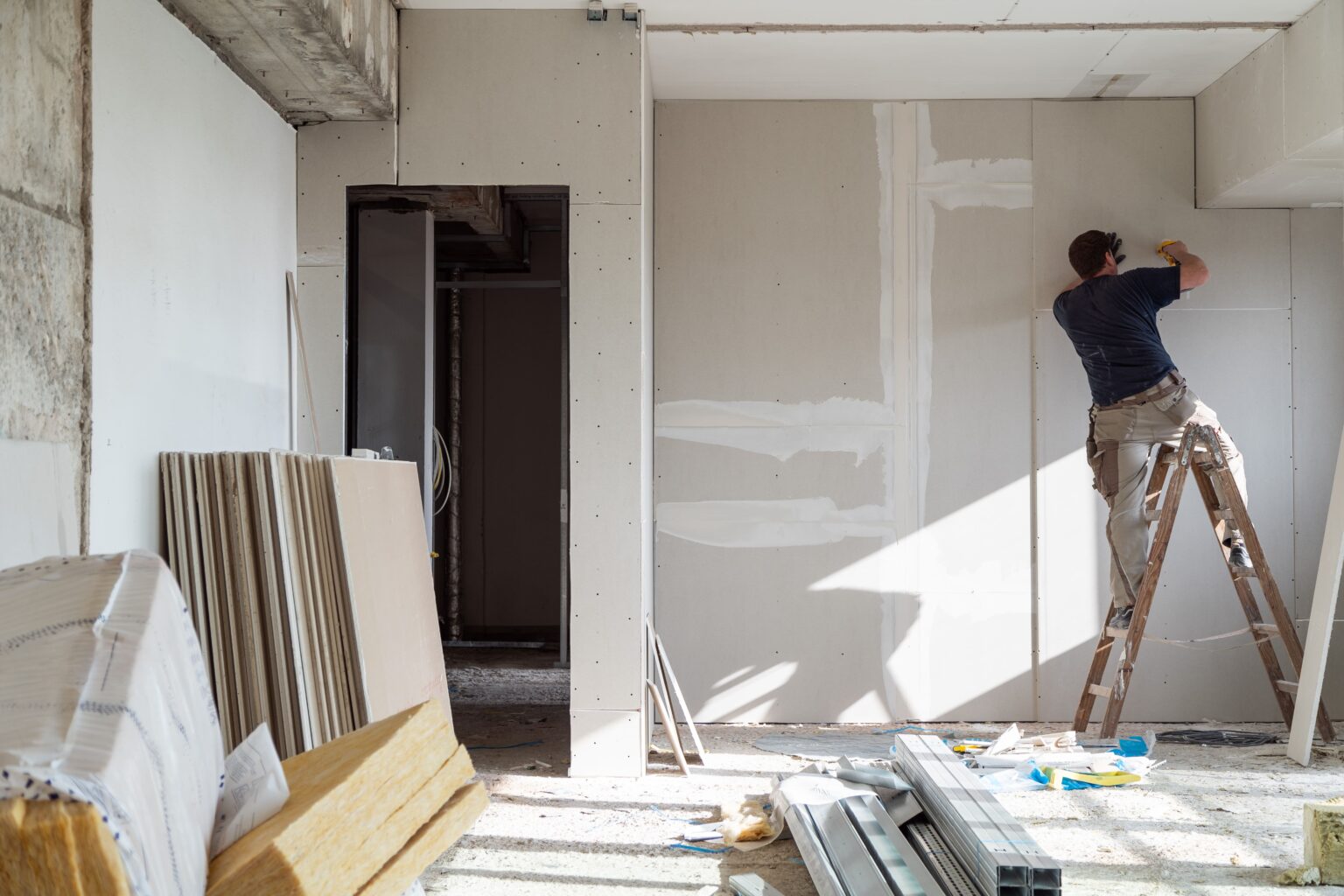
Renovation and improvement loans for properties requiring significant repairs or upgrades.
Financing Characteristics
Overview
Rehab financing hard money loans from Newport Beach Hard Money Lenders provide the combined acquisition and renovation capital that value-add investors need to transform dated Newport Beach properties into premium residences that meet the expectations of this market's sophisticated buyers. Newport Beach's established neighborhoods — Corona del Mar, Newport Heights, Cliff Haven, and Eastbluff — contain significant inventory of 1960s-to-1980s era homes where the land and location value has dramatically exceeded the structure value. These properties represent the most compelling renovation investment opportunities in the county: premium locations, motivated sellers or estate situations, and buyer demand for well-executed contemporary renovations that the market rewards with substantial premiums.
We combine acquisition and renovation capital in a single facility. Acquisition capital closes at settlement. Renovation funds are held in construction escrow and released through a verified milestone draw process — funds transferred within 48 hours of inspection confirmation. We do not require W-2s, tax returns, or employment verification. Our underwriting is on the deal: purchase price, renovation scope, renovation cost, and after-repair value in the specific Newport Beach sub-market where the project is located.
Rehab financing hard money loans from Newport Beach Hard Money Lenders provide the combined acquisition and renovation capital that value-add investors need to transform dated Newport Beach properties into premium residences that meet the expectations of this market's sophisticated buyers. Newport Beach's established neighborhoods — Corona del Mar, Newport Heights, Cliff Haven, and Eastbluff — contain significant inventory of 1960s-to-1980s era homes where the land and location value has dramatically exceeded the structure value. These properties represent the most compelling renovation investment opportunities in the county: premium locations, motivated sellers or estate situations, and buyer demand for well-executed contemporary renovations that the market rewards with substantial premiums.
We combine acquisition and renovation capital in a single facility. Acquisition capital closes at settlement. Renovation funds are held in construction escrow and released through a verified milestone draw process — funds transferred within 48 hours of inspection confirmation. We do not require W-2s, tax returns, or employment verification. Our underwriting is on the deal: purchase price, renovation scope, renovation cost, and after-repair value in the specific Newport Beach sub-market where the project is located.
Newport Beach renovation investing requires sub-market-specific ARV analysis. A well-executed renovation in Corona del Mar's Big CdM village generates a different ARV than the same renovation scope in Newport Heights or Eastbluff — because the buyer profiles, price floors, and finish-level expectations differ meaningfully between these sub-markets. We apply sub-market-specific ARV analysis using local comparable sales for renovated properties in the same neighborhood — not regional averages that understate premium sub-market value.
Rehab financing at Newport Beach Hard Money Lenders serves the renovation investment strategies that Newport Beach's established residential market supports.
Full renovation of dated Newport Beach single-family homes — the dominant application — involves acquiring homes with original 1970s-1980s kitchens, bathrooms, flooring, and exteriors at prices reflecting their current condition, renovating to contemporary luxury standards, and selling or refinancing into DSCR rental financing at stabilized market value. In Newport Heights and Eastbluff, these projects generate gross margins of $800,000-$2 million on renovation investments of $400,000-$800,000. In Corona del Mar, project scales are larger and returns proportionally greater.
Heavy structural renovation and reconstruction projects — involving foundation work, major additions, second-story construction, or structural wall modifications — are within our scope for experienced Newport Beach operators with the contractor relationships and project management capability to execute them. These projects carry higher cost and longer timelines; we structure terms to 18 months for heavy structural renovation scopes with appropriate contingency holdbacks.
Value-add rental renovation — acquiring a Newport Heights duplex or Eastbluff fourplex with deferred maintenance and below-market rents, renovating units, and refinancing into DSCR long-term financing at stabilized market rents — is a rehab financing application that sits at the intersection of renovation and rental investment strategy. We structure these loans with renovation holdbacks and plan the exit into our DSCR rental program upon stabilization.
Corona del Mar village renovation projects are among our highest-return renovation segment. Big CdM and Little CdM street acquisitions in estate sales or off-market situations that have not been updated in 15-plus years present renovation opportunities where $800,000-$1.5 million of renovation investment generates $2.5-$4 million in value uplift on the right street with the right buyer positioning.
Balboa Peninsula and coastal-adjacent renovation projects serve the buyer segment that wants Newport Beach beach proximity without the $15-million-plus ocean-front barrier. Well-renovated homes within walking distance of the water in Newport Heights trade in the $3.5-$6 million range, generating renovation returns on projects acquired in the $2-$3.5 million range with $400,000-$700,000 renovation investments.
Rehab financing in Newport Beach presents specific challenges that require realistic planning.
Renovation cost accuracy is critical. Newport Beach luxury renovation costs — premium tile, custom cabinetry, commercial-grade appliances, resort pool and landscape — are categorically higher than equivalent work in inland Orange County. A renovation budget appropriate for a Costa Mesa flip will not produce the finish level required to achieve a Newport Beach ARV. We review renovation budgets against our knowledge of Newport Beach construction cost reality and flag under-budgeted scopes before closing.
HOA and design review timing affects Lido Isle, Linda Isle, Newport Coast, Big Canyon, and Harbor Ridge renovation projects. Exterior work in these communities requires HOA architectural review board approval — 30 to 90 days for substantial exterior projects. We factor HOA ARB timelines into loan term structures for properties in these communities.
Market absorption timing is more price-sensitive at higher price tiers. Renovated Newport Beach properties above $8 million have longer average marketing periods than properties in the $3-$6 million range. Rehab financing for projects in the premium price tier requires loan terms with adequate marketing period buffer — not terms that force a price concession to meet an arbitrary maturity date.
At Newport Beach Hard Money Lenders, rehab loan evaluation begins with an honest deal assessment: purchase price, renovation scope and cost estimate, ARV based on local comparable sales for renovated properties in the same Newport Beach sub-market, and projected timeline to sale or refinance. We issue preliminary terms within 24 hours. Renovation funds release through a 48-hour-from-inspection milestone draw process. Interest reserves eliminate monthly payment obligations during renovation. No prepayment penalties at sale or refinance.
Newport Beach and Orange County offer exceptional rehab investment opportunities in neighborhoods where strong location value, aging housing stock, and robust buyer demand combine to justify renovation investments. Corona del Mar's Big CdM village delivers among the highest renovation return multiples in the county — the buyer depth and price ceiling in this sub-market reward well-executed renovations with premiums that more than justify premium renovation investment. Newport Heights offers a more accessible price tier with strong Hoag Hospital and SNA Airport executive buyer demand. Eastbluff's family-oriented buyer pool rewards school-district-adjacent renovations with family-optimized floor plans. Cliff Haven's ocean-adjacent positioning serves buyers who want Newport Beach proximity at sub-$5 million price points. We apply sub-market-specific ARV analysis and renovation cost benchmarking to every rehab loan.
Related Services
Frequently Asked Questions
Both products combine acquisition and renovation funding in a single facility with milestone draw releases. Fix-and-flip loans are specifically structured for short-term renovation-and-resale projects with 6-to-12-month terms optimized for sale exit. Rehab financing encompasses both sale-exit projects and value-add rental projects where the renovation is followed by refinancing into DSCR long-term rental financing rather than sale. Rehab financing terms may run 12-to-24 months for projects that include a stabilization or lease-up period after renovation before the permanent financing exit.
ARV is established through comparable sales analysis using recently sold, similarly renovated properties in the same Newport Beach sub-market. We commission local appraisers who work exclusively in Newport Beach and adjacent coastal communities. Comparables are drawn from the specific sub-market — Big CdM, Newport Heights, Eastbluff, Cliff Haven — not from broader regional averages. We evaluate renovation scope and finish-level assumptions against the comparable properties to ensure the ARV reflects what the market will actually pay for the renovated product you plan to deliver.
We finance renovation scopes ranging from light cosmetic updates to comprehensive gut rehabilitations including structural modifications. Kitchen and bath renovations, flooring, roofing, electrical, HVAC, plumbing, pool and landscape, room additions, and second-story construction are all eligible renovation scope items. For properties in Newport Coast HOA communities, we verify that proposed exterior renovation scope is compatible with HOA architectural review requirements before finalizing the renovation budget.
Renovation draws are disbursed within 48 hours of inspection confirmation. When you submit a draw request with supporting contractor documentation, we schedule an inspection within 24 hours. Inspection confirmation triggers fund release within 48 hours. For Newport Beach luxury renovation projects where maintaining A-level contractor relationships requires prompt payment — and where losing position with a premium trade contractor causes project delays — this 48-hour draw cycle is essential.
You need a qualified, licensed general contractor experienced in Newport Beach luxury renovation — not necessarily personal construction credentials. Successful Newport Beach renovation investors often manage projects through established GC relationships while developing their own market knowledge. For first-time Newport Beach renovators, we review your contractor's track record in the Newport Beach market, the renovation scope's appropriateness to your experience level, and your financial reserves relative to the project size. Newport Beach's premium renovation market is unforgiving of undercapitalized or under-supported first-time projects.
Hard money financing for single-family homes, condos, townhouses, and residential investments.
Financing solutions for office buildings, retail centers, and commercial real estate investments.
Specialized loans for income-producing rental properties and real estate portfolios.
Hard money financing for duplexes, triplexes, apartment buildings, and multi-unit complexes.